John Paul Francis
Who am I?
I am a producer who is passionate about delivering deep multimedia experiences and inspiring a sense of community. In the past I have worked as a 360 video producer, VR developer, deep learning/computer vision researcher, and CTO/co-founder.

Current Work
I now work full-time as a Founding Spatial Computing Engineer at Schemata, Inc. building spatial intelligence applications.

Look through my LinkedIn for more information.

Skills

Development

Software Development:
Cursor, Python, Tensorflow, PyTorch, Unity3D/C#, Flutter, HTML/CSS/Javascript, FastAPI, AWS

Science

Artificial Intelligence:
Deep Neural Networks, Semantic Segmentation, Integrative Generative Modeling, Multi-modal Training, Classical Methods
Bioinformatics
Multi-omics, multi-channel/time-series Microscopy, and Clinical Imaging
Biological Physics:
Statistical Mechanics, Thermodynamics, Electrostatics

Production

Multimedia:
HLSL shaders, Gigapixel and Panorama Photography, Adobe Suite, 360 video production

Works

Science

  • High Resolution Structured Light Scanning for Digital Preservation of Cardiac Pathology Specimens
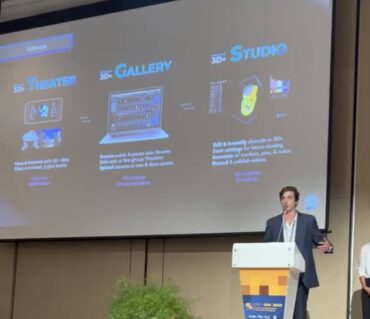
  • Microscape

    Microscape

    ISBI 2023 Industry Day Awardee.

  • Auto-segmentation and time-dependent systematic analysis of mesoscale cellular structure in beta cells during insulin secretion

    Auto-segmentation and time-dependent systematic analysis of mesoscale cellular structure in beta cells during insulin secretion

    PLOSOne publication: The mesoscale description of the subcellular organization informs about cellular mechanisms in disease state. However, applications of soft X-ray tomography (SXT), an important approach for characterizing organelle organization, are limited by labor-intensive manual segmentation. Here we report a pipeline for automated segmentation and systematic analysis of SXT tomograms. Our approach combines semantic and first-applied instance segmentation to produce separate organelle masks with high Dice and Recall indexes, followed by analysis of organelle localization based on the radial distribution function. We demonstrated this technique by investigating the organization of INS-1E pancreatic β-cell organization under different treatments at multiple time points. Consistent with a previous analysis of a similar dataset, our results revealed the impact of glucose stimulation on the localization and molecular density of insulin vesicles and mitochondria. This pipeline can be extended to SXT tomograms of any cell type to shed light on the subcellular rearrangements under different drug treatments.

  • Neural Network Integration of Multimodal and Multiscale Cell imaging Using Semantic Parts

    Neural Network Integration of Multimodal and Multiscale Cell imaging Using Semantic Parts

    PhD Thesis: The structural modeling of cells can be accomplished by integrating images of cellular morphology from multiple scales and modalities using a parts based approach. In this thesis, we demonstrate a method for combining the statistical distribution of structures from x-ray tomography and fluorescence microscopy using neural networks to predict the localization of high resolution components in low resolution modalities by using the single cell as a shared unit of transfer.

  • Neural Network Segmentation of Cell Ultrastructure Using Incomplete Annotation

    Neural Network Segmentation of Cell Ultrastructure Using Incomplete Annotation

    ISBI 2020 Publication: The Pancreatic beta cell is an important target in diabetes research. For scalable modeling of beta cell ultastructure, we investigate automatic segmentation of whole cell imaging data acquired through soft X-ray tomography. During the course of the study, both complete and partial ultrastrucutre annotations were produced manually for different subsets of the data. To more effectively use existing annotations, we propose a method that enables the application of partially labeled data for full label segmentation. For experimental validation, we apply our method to train a convolutional neural network with a set of 12 fully annotated data and 12 partially annotated data and show promising improvement over standard training that uses fully annotated data alone.

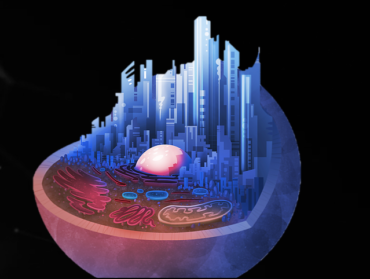
  • The World in a Cell

    The World in a Cell

    Collaboration between the USC Bridge and the World Building Media Lab. Worked as a Visual and Scientific Researcher towards the creation of an interactive room-scale single-cell VR experience.

Development

  • Cardioscape

    Cardioscape

    CTO  (2023-2025)

  • Microscape

    Microscape

    CTO (2021-2025)

  • Interactive Image Segmentation in Unity
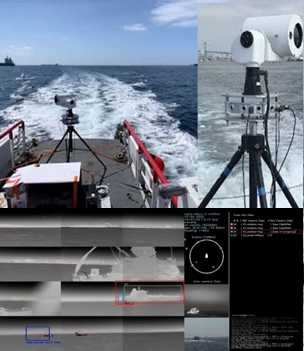
  • SeeSharp: Perception and Situational Awareness for Maritime Applications

    SeeSharp: Perception and Situational Awareness for Maritime Applications

    Lead developer on project for UtopiaCompression Corporation

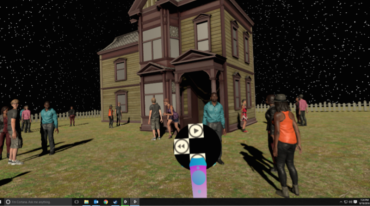
  • DAISH

    DAISH

    Prototype developer for Air Force VR training application

  • Behind the Style

    Director of Photography, DIT, Lead Developer – VR Fest 2018 Top Prize – Accenture, Specular Theory

  • Left Of Boom

    Left Of Boom

    National Association of Broadcasters selection and top 3 finalist at the USC Body Computing Conference. One of 3 developers on a 9 person interdisciplinary team experimenting with agency and procedural narrative.

  • Fraiche

    Fraiche

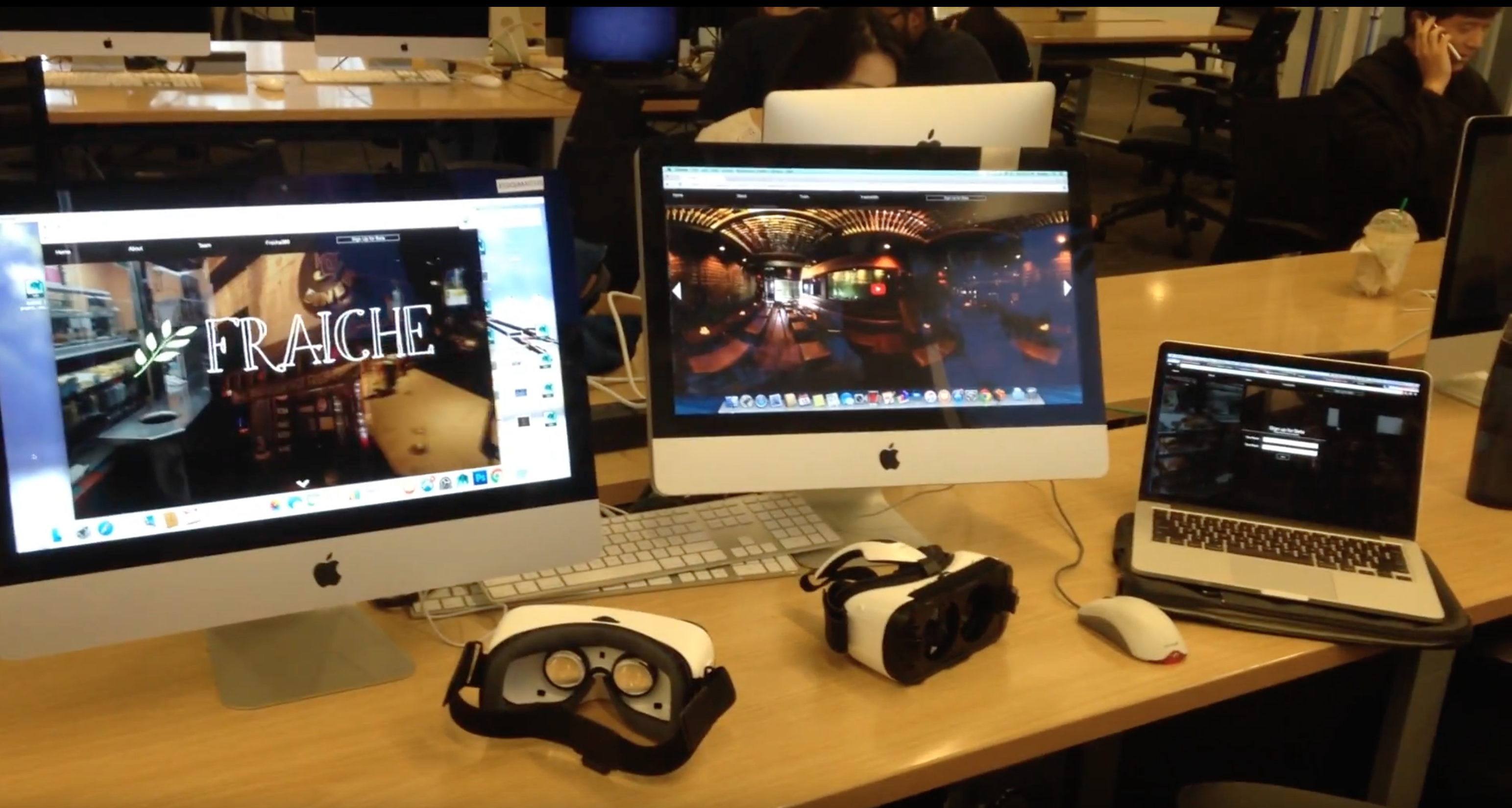
    Team capstone CS project. Won 3rd place at the VRSC Walt Disney Film Festival, Immersive/AR category. Included a website, mobile app, and VR experience focused on immersive, media-rich, restaurant discovery.

  • Grounded LA

    Grounded LA

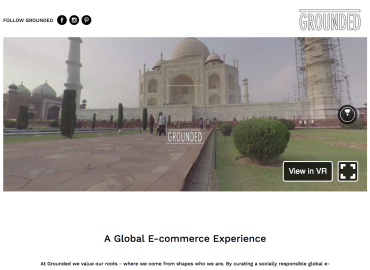
    CTO of a small startup called Grounded. Developed the eCommerce website and shot a VR promotion for the rollout of the Kolhapuri Chappal out of India.

  • CISCOUSA

    CISCOUSA

    Freelance site. Worked as a consultant in design, development, and branding.

  • SimCity Final Project

    SimCity Final Project

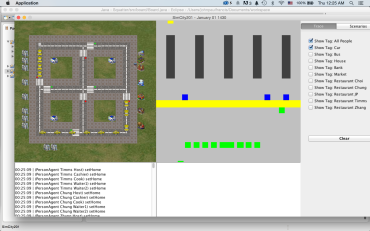
    Java final project for software dev. I was team leader of a 5 person group that pushed 911 commits and 134,000 lines of code in two weeks.

  • Agent-based Restaurant Project

    Agent-based Restaurant Project

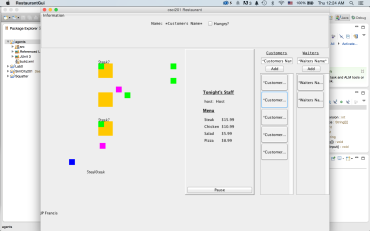
    Java project implementing agents to simulate a restaurant. Created in my software development class sophomore year.

  • Qt Game

    Qt Game

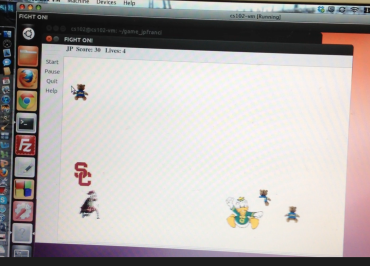
    Game created using C++ and the Qt graphics package during my data structures class, spring of freshman year.

  • Puzzle Game with A*

    Puzzle Game with A*

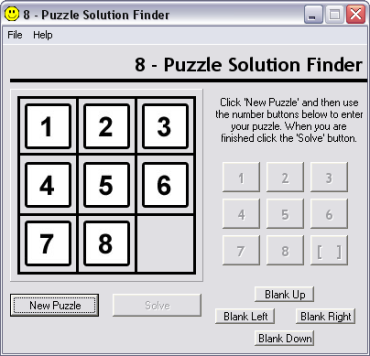
    C++ project created during my data structures class. Sliding tile game with ability to generate solution through A* algorithm.

  • CommonCore

    CommonCore

    Worked as primary javascript developer in v1 rollout while employed at AltonCreative. 2014

  • RFResources

    RFResources

    Worked as primary developer for javascript and responsive design. AltonCreative, 2014

  • BoonesGuide

    BoonesGuide

    Free-lance work. First project in which I sub-contracted a designer and another developer in order to help make pop-up site for a venture in Palo Alto. The site was used successfully for a capital pitch and has since acquired partners, re-branded under everstrong.com. **Load time compromised since taken out of production**

  • ChristinaBuchmann.com

    ChristinaBuchmann.com

    Free-lance. Worked with a design colleague in Palo Alto to create informational site for a private tutoring service.

Production

  • Lightning in Our Bones

    One-man production – US Olympic Halfpipe skiers in Sun Valley, Idaho – USA Today VRtually There

  • Too Big To Flail

    One-man production – Highball Boulder character piece out of Bishop, CA – USA Today, VRtually There

  • Standing Rock 360

    Standing Rock 360

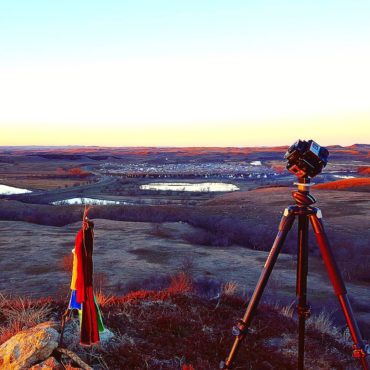
    Character piece I shot on a trip for USA TODAY, unfortunately was not released due to a lack of journalistic balance.

  • Prairie Treasure

    One-man production – Wildlife and landscape piece at Badlands National Park – USA Today VRtually There

  • King of the Hill

    One-man production – Longboarders out of Malibu, CA – USA Today VRtually There

  • JMT

    Personal 360 live action panoramic composition made on the Yosemite stretch of the John Muir Trail.

  • Volume VIII

    Student project live action narrative VR piece. Stop motion over a base panorama.

  • The Missing Third

    Student timelapse project also formatted for gray anaglyph stereo.

  • VR RPL LAUNCH

    Student virtual reality project documenting the USC Rocket Propulsion Lab launch. Made as part of a research lab during the fall of my senior year. Included a sampling of the prototype Jaunt, Izugar, and Freedom360 cam which were all state of the art at the time.

  • Dad’s 60th

    Personal project made for my father’s birthday celebration

Contact

Feel free to reach out.
Email: johnfrancisusc [at] gmail.com
Phone: +1 (Three oh one) 325-5484

End of porfolio. Scroll down to see my blog.

Go back to top or use the menu to your left to navigate.

Blog

Email excerpt about LA and Religion

Was thinking more about this and saw a TED talk on how bad city flags are so I tried my hand at one that might capture the city’s identity. You may find it interesting. Here’s the current one below and then mine after a short explanation.

I first saw Los Angeles in movies.  Red convertibles going up sunset boulevard and palm tree lined roads. The characters would look up at the trees in awe, and when I visited Los Angeles as a child, I did too.

I never dreamt of being a celebrity, but there was a sort of spiritual calling that brought me here. I think all of us in this city share the personal experience of looking up at these fronds and dreaming; these stars and angels that always remain beyond, but feel so close here.

As if for some reason, this is the life we have chosen: to sit on this far flung beach in vivid color on the edge of the universe, continually re-imagining some exotic America and building our endless path to the stars overhead.

A Note from Europe

After Munich

I have to confess that I’m quite happy to have left Munich. And to the Bavarian kingdom at large I have a feeling comparable to a situation in which you must excuse yourself from a well-furnished but ugly cottage in which you were expected to stay the night with distant relatives.

And to go further, it’s difficult because the hostess has just proposed a windy-pathed board game with acrylic pieces of ridiculous detail that’s really best played with 6 people. And your leaving will make it five. So they all give you a deeply tragic look because they’re truly trying their best to manufacture enjoyment but are entirely too stilted to pull off the charade. Especially without you.

So you leave for the nearest motel, end up somewhere in central California, recall a gothic accordion player on the street, and question the difference between beauty and power – hoping the excellent insulation and square tables aren’t facilitating designs for greatness that may flash across those anxious, scary blue eyes.

Inside Slovenia

The country struck me perhaps for its similarity to Idaho and Colorado, and but for its idea of remoteness without human growth.

Croatia

Incredible for its lack of any guiding figure. For its center-less-ness and ancient walls that in some sense seem eternal. That its people will always carry on. Knowing that regimes will come and go and they will always be simply the coast.

Budapest

A city that is the closest remnant to what you might understand as Babylonia. A place that was once rich and now evokes more the idea of a mess. That its rulers never had plans beyond the exquisite.

Prague

Most remarkable for its feeling of revelation, a heart within Baroque misery.

Stockholm

In some sense, nothing but cold. Unconquerable and uncontested. They were able to sit things out. And in fact they do still.

From the North


“What’s the word for someone who can read between the lines?”
I looked at him in that Sodermalm bedroom, and I wanted so badly to know his answer
Knew so badly that I should
But sometimes you have to sit and recognize that your vocabulary is poor
That you’re still learning English
It was not always my father’s language
 
Looking at that Jester standing at the old end of the Charles Bridge I wish only that I had taken a picture
For if I were to draw it, it would need to be a tapestry for all of Europe
With studied baroque lines intersecting the intangible 21st century
How could I?
 
IV
 
The question of what comes next is uncertain enough to be uncomfortable
As if “may I please skip ahead”
“Am I to be great”
, to be rich?”
May I be content to the understanding that there were once castles and darkness
And misery is less widespread
That I simply live somewhere warm
 
Brooklynn
 
Did you know ‘hello’ became popularized only with the rise of the telephone? The operators were really debating what to make it. It was almost ‘ahoy’. Some abstracted indication that you’re there.
 
There’s a way to bring this together and as I’ve gone through Europe I’ve recognized more and more how limited communication is; which is to say it will be made better. You think of talking to your great great grandkids and how they might speak, what stories their buildings will tell, what new nations and religions might form. And you just want to make sure you’re doing everything you can to help them be most communicative. Providing rituals to help them dance in the dark.
 
So any way.

A Note from the John Muir Trail

            It’s not quite clear why sticky things should annoy, not in an abstract sense
            If we’re thinking about mass, composition, all things equal, it would be a pleasant thing
           
Take a step
           
The discomfort of stickiness suggests a need for compartmentalization, and the hypothesis that that
is the nature of life
            To separate piss and poop, “vacate”
            And we are what, then, exactly?
            The antithesis to entropy?
            I thought we were accelerating it, lighting fires
            If the purpose is neither order nor disorder then what is it?
            You can say love but that’s a different channel of thought, a different vocabulary of life
           
            People should keep better track of these things
            Mathematics is the only capable language of uncontested reason
 
 
            There’s this concept I’ve become extremely interested in:
            That the distance and spatial relationship between a vernacular and mathematics mirrors/analogues that between the living and inanimate.
            Math is a language of pure reason, that which is spoken cannot be contested, revelations are inherently progressive.
            Vernacular, on the other hand, has infinite ways to dance within/around the same understanding. Infinite contest, inherently non-deterministic, and in that sense, extremely ill-suited for communication in the pursuit of reason.
 
            However, mathematical language can only represent that which is within the bounds of the word. It exists as a lone entity in that sense, similar to computers that may only call upon and import explicit packages for which a definite spatial memory must exist.
            Vernacular, on the other hand, has the power to represent a world beyond the clause, and in that sense is the language of individuation (think in-divid-ed) in the most literal sense.
           
            The question, then, is: in pursuit of what?
 
            It is strikingly clear that vernacular in its current form is exceedingly clumsy and ill-suited for what we might call complete communication. The roots are no longer true to meaning. A disconnect between form and substance.
            It seems possible that visual media, and the moving image particularly, is coming to surpass these limitations and it remains to be seen what role impressionism will stand to play.
 
            There’s a lack of clarity as to what the teleological purpose is. But I think it’s fair to assume that whatever is ultimate is advanced by communication. Whether that advance is towards order and encapsulation or entropy and remix, however, is not answered by an examination of communicative vernacular.
           
            Because while language as a whole tends to pursue a state of context-less-ness and abstraction (similar to math) locality remains supreme in its generation and well as the capacity for individuated reception.
 
            This perception of locality is, I believe, at the core of all human purpose, identity, and communication and it is currently in a state of unprecedented upheaval as this locality moves from geographic (extra) to the side of the abstracted individual positioning within a space-independent network. The foundation becomes nonexistent and the paradigm of the balance between free will and determinism is called wholly into question.
 
            Moving on to how this conversation might be useful, or what logical insights might be derived from the revelation of this crux, I am completely at a loss.
 
            What it suggests, however, is the extra-dimensional incontinence of matter, which is to say that space, in the most abstract sense, does not exist. Philosophically, it is important to note that this is a different and contesting view to the Hegelian supremacy of the individual, because the understanding is derived from a premise of communion, not discretion, as the driving force of time and reality.
            If space does not exist we are able to then rid ourselves of the issue of the void as well as the paradox of gravity (a force with no medium) which, in this light, presumably exists only as an artifact of growing capacity and perception, a word that might be expressed as “understanding” but means nothing of the sort.
 
            The fundamental issue with this theory then is that my car is low on gas and I clearly need it to navigate a very definite space so I can meet friends and eat food and get laid.

Volume VII

IMG_3232.JPGBACKGROUND

So basically, the idea is to subvert the standard cinematic concepts of scopophilia and ego.

To elaborate, I’m meaning scopophilia as the kind of pleasure from viewing, particularly at distance. The voyeurism and sense of fundamental desire/phantasy normally inherent in cinematic narrative that is implicitly imaginary.

With ego, I’m meaning to explore the sense in which you typically identify with protagonists as an extension of yourself, as a super ego. I’m especially interested in the ways that this connection is established, and examining the trope of portraying a woman as a shared object of desire/bearer of meaning to facilitate it.

TRIALS

There are a couple devices I’m going to use to carry out this experiment.

One device will be mirrors which you will look into and see the reflection of your surroundings and other characters, but not yourself.

The second will be an additional VR rig that will be in the shot, presumably recording.

A third will be a sense of audience and voices that are in the background and maybe responsive to the experience to an extent, but certainly disconnected.

EXPERIENCE

 The experience will be a scene in a forest clearing. The user will have some wakeup moment and will stand at a child’s height. There may be sculptural elements that are hard to make out in the distance. A slight element of the surreal. The center of attention will be the second (‘practical’) go pro rig slightly off to the left recording.

Somehow your attention will be drawn to a mirror behind you to the right and as you’re looking into it, tripping out about your absence, a girl will enter the scene as the background voices begin to pick up, maybe some James Blake-genre music has entered.

Presumably the user will turn around to look at her after seeing her enter in the mirror. She’ll be exploring the space, perhaps blurred and glowing, ideally stereoscopic or in some sense visually superior to the rest of the scene, like she’s another viewer entering maybe.

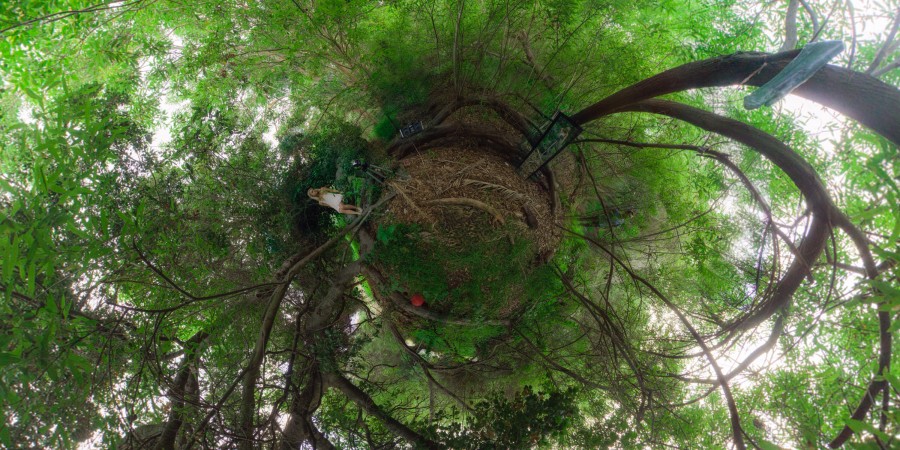
She doesn’t pay attention to the user and eventually she examines the rig. The image below is something I shot last semester shortly after my friend was up close to the rig and twisting his head to look all around it. The image struck me for whatever reason.

As this is going on, the clearing has become increasingly more surreal, colors, elements, fading in. Things like the image below. Weird CGI creatures hopefully. Voices. Music, intensifying.

Then at some point a guy enters, maybe naked. There’s a scene with the girl staring at him and him staring back with the rig perfectly between them from the viewer’s perspective. He’s a definitively surreal element. The moment is not overly remarkable to the external environment. Things carry on. Somehow he either fades, or the girl becomes satisfied with the spectacle and disengages. He’ll look something like this.

Then the girl turns and stares directly at the camera. The music, but not the scenery, halts. She changes to become even more hyper-real visually. Silence except for a heartbeat, breathing, and maybe her footsteps.

She approaches, staring directly at you. Gets extremely close, whispers something completely indecipherable, yet audible.

It’s not romantic or sexual in a traditional sense, but there’s an incredible likeness, as though she may be your soul, or guardian, mother, maybe.

Ideally there would be a contact in real world analog to accompany this moment.

Then she’d somehow become one with you in a crescendo of light as the music and voices re-enter with even more intensity than before. After that moment everything would transcend and movements and visuals would become complete fantasy, blurs, trails, moving with increasing speed as the voices and music reach max impact.

Ideally, the sun transforms into a red giant and consumes everything and then it’s over.


GOALS

 If these concepts were carried out to their fullest and purest, the ultimate goal is to create an orgasm for the user without any pornographic elements or contact.

I don’t think that’s going to happen.

But, on a basic level I do want to inspire some sort of ASMR and the piece is a sort of tribute to David Foster Wallace’s Infinite Jest and the entertainment cartridge made by a Canadian terrorist group that is deadly in its allure.

In a more practical sense I think this is an important experiment to see what kind of new cinematic experiences VR allows, particularly in regard to understanding human entertainment and desire.

The most obvious opportunity lies in the fact that the user can enter the imaginary and has the potential to participate in it. Some scholars argue that the element of distance and separateness is vital to the pleasure of cinematic experience. I’m not sure yet.

So the structure of thought is as follows:

–           You put on the VR headset and you are fundamentally alone

–           As the experience begins, you are a child, some sort of purer version of yourself

–           See the rig and get the sense that this is a real moment, being recorded. Sense of significance, being watched, overseen, conversely to film which is generally radically ignorant of its audience

–           You lose your ego in the mirror, and in a way become one with the environment, forget who you are

–           Voices make it seem that there is also something macro, unseen, beyond

–           The increasing surreal-ness of the scene then by extension allows you to feel similarly surreal/dreamy by association

–           When the girl enters there’s this object of longing, connection, something to share. This sense of distance/absence that introduces an accompanying desire, need for attainment. Not of her, necessarily, but of something. Longing. And that she might have the answer. The indifference of her and the scene to your presence also allows for an initial obsession

–           As the man enters, you see her see him, and you see him, but it does not provide any association or meaning for either of you, conversely to typical forms of protagonist association. Communion of theater situation, yet everyone’s alone

–           So, then, when she approaches you and the voices stop, there should be a sense of shock in that you can participate, you are real at some higher level, mirror scene notwithstanding. When she becomes one with you, then, the imaginary has been fully breached, distance eliminated, some argue that the loss of this phantasy distance is the impetus for the orgasm, so whatever…

–           Then the red giant is the final sense of a real camera and scene that you are a part of, but that is also somehow unbound to time and space, and you feel similarly by association. Which should be great.


TECHNICAL NEEDS

 I was initially thinking of shooting the forest as a mono panoramic in pre-sunset light and was thinking I’d shoot the girl in stereo still frames with after-effects blurring so that she would seem both ‘other’ and more real by resolution.

Alternatively, I was thinking I might shoot all the elements that would fade into the forest (mirror, girl, naked guy) in stereo and enhance the girl at some additional level…

I have the voices from a bunch of video logs that I make my high school friends do every year. Really personal and poignant in tone, interesting and sound awesome when you play them all at once.

Not sure if the Red Giant is possible.

Now that I know I have the Jaunt rig, I certainly want to use it and it makes shooting the scene with the girl’s approach much more feasible in the way I want it. Also worth noting I’d prefer the second rig to be an older generation VR rig because then you’d have an interesting sense of commentary on the art form by a higher omnipotence (i.e. the Jaunt rig)

The issue is I still want to be able to separate elements, such as the girl and enhance them separately from the rest of the scene.

I’d like to talk about how I might do this and the feasibility of this project as a whole.


Thanks so much for reading and excited to hear your thoughts!


JP


Slamdance

The Wizard of Oz and Thoreau’s stretched-out coat
Faux prestige and the space askew from conditioned thought

Cashiers that don’t know distributive math
That news is news but olds is history
That asking why not ‘her’-story would be
Pedantic

Why we understand instead over overstand
Whether that has anything to do with the cardinality of heaven
Why the name Lucy does not connote Lucifer, and is actually kind of nice, although not as nice as Mary

How we accept without protest that our technology doesn’t quite work
The certain guilty rumination unique to submitted text
That dreams are defined by impending death
Whether that’s why they glow symbolic

That I can’t remember which shoe I normally put on first
How I haven’t truly liked my toothbrush since I was 5 years old
That my favorite ice cream is Strawberry
How that sincerely makes me question my sexuality

Why the backside of a coin is called a tail and not a foot
Who the druids were and what relevance, if any, they bear to Stonehenge, Haitian voodoo, and people who use the word “fortnight”

The minutiae of conceited recollection
The franticness of bad sex
Things that are discretely less-than-infinite
The uncanny exhibitionism among the pathologically shy

Topics that could be addressed but are in no sense
Prudent
Misanthropes and the laziness of subtle humor
The mystique of other people’s solitude
How 7 billion different drummers might not sound like shit
Confluence

Old text with astonishingly modern language
Examining the unbearable lightness of being
Why drugs are not the missing jigsaw piece
That ‘dim sim’ is an obnoxiously specific way to find out that people are eating dumplings without you

That adults play dress-up way more often than children
How God died in the 19th century
Why modesty is, interestingly, still a virtue
Whether or not it’s ok to masturbate

How fantastic it is to overhear dramatic things
How most personal essays are underwhelming
That you shouldn’t tell anyone you’re a genius because it’s very difficult to prove
Run of the mill splendor and monotonous beauty

That most art is rubbish, but not garbage
How most breadcrumb trails get eaten by birds
That being conditioned to believe in a magic time where everything will work out is not inherently bad
Why nobody seems to use brannock devices anymore
The slang that parents slip into

The drift that can be caught following a weak example
Plucks grass out of the ground, sometimes common, low simmer, and other stupid phrases
Why we should, in fact, say “fuck that” to anything philosophical
That you should never write with your shoes on

The ill-will of mediocrity among good friends
Why people don’t seem to chant or enchant anymore
What we talk about when we talk about love
Who am I, what the hell is that, and how do I get there?
Couples much like us, except they’re laughing
Whether or not kids still make clubhouses
Sports, beer, and girls
The curious reluctance of some Yoga students to say “Ohm”

That we are worried about being either weird or boring
That you better agree with me or else I’ll get depressed
That Australian accents are actually kind of annoying

And that we are, undoubtedly, what we walk between

IML140 Project 4

http://rootsradio.us

RootsRadio is a platform for the relocalization of communities. It’s inspired by my high school friends and my need not only to keep in touch with them, but also keep growing with them.

Ultimately, the sites not really about telling the story, it’s about making sure there is a story; that the characters aren’t just drifting out of the frame. It’s about treating our lives with the recognition that we’re all living the same story we were living when we were 14.

Often it seems that we look at our journey as a series of episodes, chapters. And we even grow up with our lives incremented into grades with the premise of graduation. And while there is value in moving on, leaving things behind, I find we rarely are able to hold on to the things that were most important to us, namely our relationships.

Current social media seems to miss the real power of connection. It’s all too instant, and while it’s good to live in the moment, we’re really missing the meat of it. We’re not feeling the social network, we’re just hearing the noise.

The idea is to keep the roots intact, because when you do that, you can grasp the full extent of the blossom, see the branches for the tree, and begin to look at something beautiful.

The power of the project will ultimately lie in its ability to realize a send of local, unique story-space, and for this site to work, I need to figure out how to successfully facilitate the local spaces universally. The way I have the site set up currently, it functions as a document archive as well as a more dynamic space for reunion. The key will be to merge the interface so that the two are easily navigable, if not indistinguishable, and the site can grow organically in the image of the story it tells.

The major issues I ran into, and continue to run into are concerned with participation. Although people want to contribute, it often takes a push to get them to take the step. I implemented a browser-based camera to try to streamline the process, but its still lacking in the instant gratification of seeing your video appear. Once that’s implemented the site will be a little more ready to go but what I really need is ability for any user to take ownership of the project.

Right now, my vision is to do this through an opportunity to create a moment. Clearly, the site will be too cluttered if anybody can create at any time so I think there needs to be some sort of sign-up, cycling system where people are given the chance to create a moment with a prompt of their choosing. This would also solve the problem of keeping the site self-sustaining.

My final vision for the site spans the entirety of a life, really. I want to be able to look at the site and see moments of our 60’s in the context of moments in our 30’s. I want to achieve a living record that there will always be real people with hopes and dreams who cared about each other, who’s lives begun and ended in exactly the same way.

RootsRadio is a way for people to touch upon a sense of deeper meaning and timelessness, immortality even, I suppose.

IML 140 Shirky response

I really appreciated Shirky’s comments about institutions. Although media conversation is often focused on the collapse of traditional systems, why it’s happening is not often articulated so logically. We say the common people are taking back the nation. We talk about crowd-sourcing, micro-funding, and massive calls to action that are changing institution and bureaucracy; and it seems we often talk of this on the premise that institution is not the natural state of things.


To read Shirky, then, describe the phenomenon simply as the concept of groups being able to function with less managerial imperative, was much more satisfying and understandable. Where he lost me however, was in his suggestion that bureaucracies may be circumvented for good.


In my opinion, the digitized mass media system represents a much more complicated bureaucracy than its analog institutional counterparts. It’s no longer an issue of voices not being expressed, it’s an issue of voices being drowned out, often in a manner that has nothing to do with their merit.


I don’t think we’re seeing the end of bureaucracy by any means. And I have no idea what the solution is or what it will mean for us, but if everyone can talk to the world, I’m inclined to believe that no one can.

IML140 Kuhn response

This is a huge piece and a full response, in my opinion, would require a whole essay. So, I’m going to focus on one issue which I found ubiquitous, yet contradictory throughout the piece, it essentially boils down to the dichotomy of the argument and the alphabet.

At various points in the piece Kuhn asserts that remix should be treated as a digital argument. Simultaneously, however, she suggests that remix is becoming a vehicle of speech working towards Berger’s conception of a language of images.

This seems fairly innocuous at first, but I found it to be a deeply problematic undertone, as remix cannot simultaneously fulfill its mission as an objective form of speech and a critical commentary/contextualization.

The question for me, then, became, which one is it? Is remix argument? Is it truly that more revolutionary than literature?

I’d say no.

I think digital media is completely analogous to the written word, and just as argumentative. You have landmark pieces, cinema : novels, that are truly revolutionary and then you have pieces that comment on them in light of previous works. You have their likeness re-used such that fantasy novels resemble Tolkein and superhero movies resemble The Dark Knight. Similarly you have anthologies of authors works and montages of pieces of media, as well as fan-fiction of both.

Remix isn’t nearly as revolutionary as it’s being made out to be and is just a product more people having access to the new library and printing press.

IML 140 Project 3

To put it simply, I wanted to give a political voice to the phenomenon described as voter “apathy”. The argument I’m making is that low voter turnout in our democracy may not be an issue of participation so much as an issue of flat-out rejection of the system and its capabilities. Furthermore, I’m hoping to illustrate that the practice is anything but apathetic and contains powerful voices, questions, energy, and intense concern with the institutions of government.

Within this faction, I then attempted to portray the two different camps that I recognize within. The first is the individualist, activist, conspiracy-theorist, radio-ranter type denoted by Alex Jones’ character and the second is the nihilist, comedic, outspoken, “fuck-everything” type denoted by Carlin. Initially, I attempted to portray them as compliments but I found that there was a fundamental conflict that was quite difficult to resolve. I found that although they both share the same systems of recognition, same articulation of the problems, and same fundamental passion, the implications and potential they see is drastically different. To illustrate this relationship, I used straight shots and split screens.

I finally bring them together in a sort of explosion of self-immolation which in my mind is the meeting place of nihilism, absurdity, and the individualist spirit and power.

Personally, I’m not sure where I stand with the issue and I think the piece actually suffers by my own lack of direction or conviction. Maybe then, the piece is a illustration/window into a more fundamental conflict rather than an argument or stance.

IML460 Post 7

http://www.thewildernessdowntown.com/

I really loved the interactive Arcade Fire video. I’m a huge fan of Arcade Fire’s music and always feel a deep connection with the imagery of their music to begin with. Needless to say, this format took that experience to the next level and realized the personalized visualization of music that often remains unspoken and unconsidered.

I enjoyed the way the screens jumped around on the screen during the song. What makes a song work, in my opinion, is its ability to inspire some sort of resonance and connection with the life of the listener. Often this manifests itself in the recollection of feelings and memories and the moving pop-ups created an effect that seemed to mimic the generation of ideas and memories that occurs in my head when I listen to music. The content, too, evoked a sort of nostalgia and allusion to this deep story of boyhood and coming of age. The hooded runner, eye of god focused on a neighborhood, and birds in the sky really worked as a deeply personal yet universal “imagescape”.

What drove the piece home for me, though, was the fact that it was so meaning-driven, not in an imposing way, but in an entirely open-ended way. Nothing about the piece is static and there is really no message to speak of other than the message that the users were prompted to voluntarily create.

I love to see pieces like these because, as simple as they are, they seem to hit something so deep and personal in all of us. That kind of yearning for purpose and meaning in the stories of our lives.

IML 460 Post 6

The digital/online realm is presenting an interesting paradox for the concept of “place”. On one side, the digital realm allows us to gain information and knowledge about places that would otherwise be entirely unreachable from the comfort of our homes. Places can be explored virtually through Google street view, live streams, and real time data with an accuracy that is almost indistinguishable from the place itself. Beyond that, the level of information we have on places, cities, etc. allows for holistic visualizations and mappings of cities that would have otherwise been infeasible. The digital world has allowed us to understand places as an amalgamate product in a way that we never have before. We can travel the globe and discover information about places from our home that we may not even be able to gain after months of physical travel. Therein lies the paradox.

Out supposed understanding of place through the digital realm has almost made the place itself irrelevant as a physical entity. The conception of the place lies more in the digital imagining of it than the location itself. The world is becoming more and more borderless and it will be interesting to see whether or not digital globalization will lead to the dilution of endemic communities.

Ultimately, we’re just learning that the idea of place and “local” communities is a more abstract concept than previously imagined. Place has always been about the resources you have, people you can access, and mindsets you identify with, but we’re learning and seeing all this have less and less correlation with geography.

IML 140 Horwatt

I really have nothing to go on for this tutorial. I’m not familiar with and don’t feel personally connected to any political issue at the moment, except maybe voter apathy, and I find that trailer re-cuts strike me as a gimmick more often than not. Ideally I’d like to do both. A trailer re-cut with a message of some sort.

I really liked the idea that remix allows for an uncovering or commentary on fixed social/cultural histories. I like that we’re creating archives that contextualize and comment on these stand-alone phenomena that characterize our culture. It’s kind of an indication that there were real people living real lives thinking deep, critical thoughts. It’s really what allows you to relate to previous generations and the overarching human story, the fact that people cared about what was going on at some level.


Don’t really have any media that comes to mind here, pretty uninspired by the topic to be perfectly honest


NOTES

-Perpetuate the spectacle of popular media by simply parroting ideology or in some cases transforming progressive works of art into juvenile internet memes.

-digital remix needs a taxonomy for major trends
-Political OR Trailer remix?
-using the weight of the enemy against himself, mash up to have people say quotes with many words out of context
-remix allows for an uncovering or commentary of fixed social/cultural histories
-remixers work within the landscape their commenting on
-Trailer remixes as a surrealist technique?
-overdubbing is common
-only the privileged creating historical documents is changing..
-is mash-up a destruction?

IML 460 Post 5

Blog questions: which history video teaches you more? Why?

http://storyofstuff.org/movies/story-of-stuff/

http://loiter.co/v/watch-as-1000years-of-european-boarders-change/

I found both videos to be rather ineffective but I’d give the slight edge to the 1000 years of border change video. The main issue with the story of stuff was that it was entirely too long. The concepts presented weren’t nearly complex enough to warrant it and I think the runtime actually took away from the power of certain lines or segments that really did hint at something more profound. Additionally, I found the narrator to be quite distracting, even bordering on obnoxious, and think the video could have been better served without her physical presence on the screen.

I hate bashing it because I do think that the consumer culture is something that needs to be explored, but the video struck me as entirely surface level and didn’t really pursue the bigger issues in that we are willfully perpetuating and contributing to the system in spite of this knowledge and that there’s more to it than contrived cartoons, a corporate effigy, and men who made decisions half a century ago.

The 1000 years of border change was much more direct and interesting, in my opinion. It revealed the paradigm of nations as a static concept and furthermore hinted at the bigger idea of imagined communities. There was no doubt as to the accuracy of the argument and the proof was in the pudding, allowing us to take what we wanted from it. The only issue I had with it was that I’m not sure if I see its modern day relevance. It’s a great historical piece but as borders are becoming almost obsolete, I think the piece lacked a deeper impact. Regardless, I think it taught a more effective lesson.

IML 140 Project 2

The purpose of my project was to create an expository piece on the Greek Life at USC. Since becoming an active member of a fraternity, I’ve become obsessed with the Greek culture as an anthropological phenomenon. Greek Life is often inseparable from the university, especially at this school, and there’s an incredible symbiosis that occurs between the two that contributes to this idea of the “college experience”. As a larger society, as well, there is an incredible paradox as we recognize the need for young adults to explore yet lament the loss of innocence and occasional debauchery that comes with it.

My project is an attempt to reveal the unheard voices, yearnings, and fundamental will to meaning that individuals in the system are pursuing. As a society I think we often forget what it means to grow up and I feel a need to shine a light on the real feelings, and worries, and desires of these people going through “the years of their lives” and figuring out what kind of people they want to be and what kind of lives they want to live.

Technically, the piece mostly consists of raw recordings. Occasionally, I wrap the different scenes in Hollywood lines to give a sense of how these issues manifest themselves in popular culture. I tried to make the piece local yet relatable on a fundamental level.

I think the “coming of age” story is the most profound experience we share as a people and I saw myself in an excellent position to reveal it directly from within. As I got further into the piece I became more and more obsessed with it not just as an argument but also as a period piece and a character study. I was fascinated by the common themes, the common struggles, but the difference in the approach and mindset that the individuals carried. I feel as though you could hear hints of the men and women they were all going to become.

I split the project into three sections; the first was a kind of overview, the “seen” Greek Life, the manifestations of the situation in all their haze and excessive glory. In the second section, I tried to peel back the layers and reveal the fundamental doubts and concerns underlying the fun-land. The centerpiece of this section was a sermon that a friend gave at a Greek Community Group. For me it has an incredible significance in that we are all looking for places to put our faith, what to believe as the “right way” and how it is changing and compromising our foundations as people. The final section was about the moment and our wants and desires, what we want out of these moments, and where we hope they will lead us. I put Deep Blue by Arcade Fire as the background music and although I was worried it might be slightly cliché, I wanted to use it as an allusion to the ending of Richard Linklater’s film “Boyhood” .

IML 460 Post 4

For my final project I want to produce some sort of platform that allows for advancement of local, or community-specific, media.

I’m currently playing with two ideas. The first is a site/app called TroFlow that I’ve done some work on in the past. The platform would serve as an event forum in which people could list smaller scale, preferably student-run, arts events in the area. Listings would include but not be limited to open mic, hiking trips, small band gigs, trivia nights, whatever and would hopefully build a community around social, creative arts as an alternative to the drug-fueled party scene.

The second idea is a re-imagining of a Radio/TV show I created with a friend in high school called Jay’s Corner. In high school it was a sort of news show where we’d bring on guests and do interviews about local happenings. Now that we’re all spread out over the world I’m seeing it as an Internet podcast that would air weekly or bi-weekly. The reason I want to do this is because I feel like our communal sense of home is slowly slipping away and becoming irrelevant. We were so close in our childhood and now that we only see each other during the holidays, it’s hard to stay connected to one another and we all feel a distance from that part of our self that is still wrapped up in the moments we all shared.

For both projects I hope to serve a very small, isolated community. My feeling is that “local” cultures, however we begin to define local, should be maintained such that different frames of consciousness may still exist and inform each other across the many worlds we are a part of. Each idea is potentially scalable but I feel that scaling it personally, into communities I’m not an active part of, would completely defeat the purpose.

Floodwatch: I like contributing to research, but this project seemed entirely too removed from the experience of life for me to feel invested in it. I’d rather make art and work towards creating meaning and a better world than put on this tin-foil hat of sorts.

Quantified Self: Mildly interesting, but again, I don’t feel that it’s the role of the Internet to tell us what makes us upset and so forth. The fact that people are looking for answers is good but I feel like raw data is not the place to find the answers to these types of questions.

Freakonomics: Seemed like a weird exercise in absurdity that I didn’t relate to at all. The data they collect could be interesting but I don’t really see too much meaning in it.

IML140 Project 1

585b9

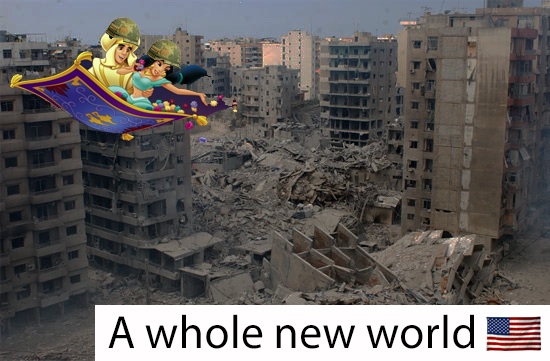
I suppose this argument is starting to border on irrelevant, but with this image I hoped to convey the destruction caused by the American involvement in the Middle East. When I was in middle school, I remember being stunned to learn that Baghdad had once been an economical and social center of the world, a shining city of sorts. I always wondered what happened and how the area had fallen into such disarray. The concept of the Middle East as a thriving center of humanity is a reality that has prevailed throughout much of recorded human history. We still see hints of it this lost world, Aladdin being one of them, and my concern is that this memory is being slowly lost or forgotten.

My question always was, “what happened to Baghdad? How did it fall from greatness?” And while there are many factors that have historically led to this development, I’m hoping to recognize that our efforts and initiatives will have a marked place in history as contributing to the incapacitation of the Middle East.

If you look at the before and after pictures of Iraq’s cities, we really demolished a working and living society. By incorporating Disney and the “whole new world” narrative I hope to appeal to a sense of lost innocence in that we are not working to create the stories our children dream of. Furthermore, I put army helmets on the characters to put a strange irony on the military saying “See the world!” and Aladin saying “I can show you the world”.

IML 460 Post 3

Who do you want to reach with your final project? Who is your chosen audience? Who do you want to address? They can be defined by age, class, gender, race, location, profession, interest, education, market, etc

What media habits do they have? So how want you reach them? What do you know about this audience?

Is there a related project that you admire?

Are personal or mass media approaches to distribution better? In which cases? Show examples. John Burtle and Robby Herbst generated this question.


With my final project I’m hoping to reach a limited community that is close to me. I’m thinking I want to address my friends from high school, the USC community, the Greek community, or my fraternity community. Basically, I want to reach a micro-chasm and inspire a renewed sense of purpose and meaning that may have somehow been lost or forgotten. The aim of this will largely be towards social connection for its own sake.

A lot of these people use social media, and while that’s a step in the right direction, I really don’t think its nearly personal enough or close to the facets of people and real human connection that we really care about.

A related project is Snapchat, or at least snapchat in its original form where it allowed you to create communities through the interface. The app was less global and more local and I think my aim is to really bring media back to the communities where we ultimately live out lives.

In response to the question of whether personal or mass media distribution is better, I ask better for whom? I think there is no question that personal distribution is more enriching and meaningful to individuals, but I think mass media is an excellent way to raise awareness in the interest of a cause. Generally, however I think we’re over-saturating ourselves and are losing the beauty of local, un-mediated (or at least personally mediated) experience that we can truly own and connect with. So I hope to address that in some way.


IML 140 DJ Spooky

NOTES:

A dance of neologisms, meaning is entirely untethered and context doesn’t exist. Comparing sound to a vector. Sound carries memories, no position. Vector. Carnivorous. Any sound can be you, any word you say is already known. Outside of time because the only moment is thought. Home is where your cell phone is. It’s all software. We create our history. Ultra-media saturated youth culture. Rhythms hold everything we know and understand together. Machinery of culture as an organizing system. It’s all symbolism. We’ll create new perceptions/sounds won’t be a living death. Music says there could be another way. Music of permutation. Jazz, going to the crossroads. Is it always the changing same? Sampling plays with perceptions of time. Do you want to have a bored delerium or an exciting one.

RESPONSE:

Until reading this article, I’ve always thought remix music was a sort of cop-out. Sometimes is was good, fun to listen to maybe, but it seemed cheap and paled in comparison to “real” musicians who would play “original” music. After reading this article, I came to fundamentally understand that everything is a remix. Even “original” songs are just a remix of the finite notes and chords on a guitar, pitches a singer can produce, etc. All songs are permutations of the sounds that we have at our disposal. The bigger conceptual leap for me was to then realize that everything in the world is a remix of the resources that exist in this closed system. Leaping off of that, all my ideas are a remix of the concepts and experiences I’ve come in to contact with. The external and internal are one in the same, originality doesn’t exist, and everything is symbolism, ultimately.

I’ve always thought mediated experience and over-saturation was a sort of evil and, while I still think there is a danger to it, the article made me realize that it’s really the driver of growth, testing all the permutations and seeing what works.

IML 460 Post 2

https://www.youtube.com/watch?v=AmWJtG6Q9wA

Although this piece is quite obviously biased and may use some shots out of context, I think it very accurately portrays the power of the media’s spin. In this case Stewart makes an appeal to logic that reveals the absurdity of Fox news’ coverage while also attacking their credibility in pointing out certain bits of theirs that are entirely ill founded.

The idea that this incident, and most incidents of this nature, are now entirely mediated, strikes me as quite problematic, especially when entire groups of people can be spurred to protest and police can be moved to militarize based upon it. Ultimately Stewart carries just as much spin as FOX and while I do worry that this story has entirely superseded reality, I respect Stewart’s intent to wade through the mess and try to bring the incredibly inflammatory event back down to earth.

  1. I was a huge fan of public secret. I’ve always been extremely fascinated by the idea of a state-determined or managed life and I think the ramifications of the concept of a prison are extremely profound and problematic. It points to an incredible issue with our society that the idea of prison can co-exist and intermingle with our “free” lives. The fact that prisons do exist points to a constant undercurrent and foundation that not only allows for, but also, in a sense, requires the system. The more you think about it, the more it does seem like some grand secret, almost on par with some sort of hunger games society where people disappear and enter an arena that nobody really knows anything about. The project was provocative to say the least.

IML 460 Post 1


Move | Educate | Illustrate | Shock | Amaze | Awe | Excite | Encourage | Love | Welcome

I was pleased with this selection and thought it represented exactly who I aspire to be. The interesting thing, however, is that I don’t think it necessarily represents who I am at the moment. The main reason for this, I realized, was that the “interactive” verbs we chose from were all extroverted and action oriented. If was to describe myself I’d say I’m much more introspective and, more often than not, aware at the cost of inaction. So, in a way, these words all represent the direction I hope I’m heading; namely, being able to better interact with and contribute to the world around me. One way I’ve always been able to do this is through my work.

Throughout my life thus far, I’ve always felt I was much more effective in communicating myself through my creations. This took the forms of writing, formal speeches, and even music, and I still feel that the way I present myself in my work is often more representative of myself than my informal interactions.

So, ultimately, I’d argue that these verbs are more indicative of how my work interacts than how I personally interact. Hopefully, as my sense of self develops, the two arenas will become closer to, if not indistinguishable from, one another.

IML104 Remix assignment

I was initially working on a remix piece about the portrayal of news. As I was going through the tedious process of sifting through news clips, I was distracted by basketball videos in the “recommended” tab on my screen. In retrospect I find this interesting because I’m not sure if the images would have taken such a hold of me if basketball hadn’t been on the forefront of my mind. Regardless, today is the beginning of the Sweet 16 games for March Madness and basketball has been very much on my radar. Normally I don’t get especially excited about college basketball but this year my extended family formed a pool with a substantial grand prize. Naturally, I have become very involved with my bracket, almost obsessing over it, checking scores, checking my points, checking other people’s points, and figuring out my standing. The more I think about it, the more I realize how amazing the bracket is as an image. During the month of march, the NCAA bracket is an image that nobody can take their eyes off of and the degree of personalization that it represents is quite astounding.


Nobody sees the same thing when they look at the bracket. From the very beginning to the very end, people have unique experiences of visualization that are actually manifested as each is filled it out. The amazing thing is that we actually get to see other people’s visualizations, and furthermore, the support of money actually suggests that each bracket submission is a genuine projection of what the individual believes to be the complete image. We can actually see the image as others see it, and the amazing thing is that these visualizations are so unique. In my video, I try to take the viewer through the process. I try to portray the scope of the phenomenon and then delve into the community that forms around this image and its visualization. I tried my best to depict my process of visualization and how unique factors in my life subconsciously impacted the way in which I saw the bracket. Towards the end, I argue that we are all painting a sort of tapestry as we fill out our brackets.

IML104 Interactive 2

http://www-scf.usc.edu/~jpfranci/IML104P2/run-local%202/Main.html

IML Post 4

Burnett argues that the convergence of biology and technology means that conventional notions of human identity and subjectivity will undergo profound changes. What does he mean by this? What examples does Burnett offer throughout the chapter, both in terms of subjectivity and human identity. What are real world examples of the integration between human and computer technology?

This chapter is primarily concerned with how the increased presence of technology in our life will shape the way we understand consciousness. Namely, he believes that as we begin to bridge the gap between our own capabilities and the capabilities of our machines, perhaps even augmenting our own abilities through machines, we will begin to understand the processes of biology and technology as parts of the same system. In order to illustrate the ramifications of this idea, he uses his classic example of brain scanning. He argues that as we try to monitor and understand ourselves through machines, we project facets of the machine’s processes onto ourselves and consequently perceive ourselves as closer to the machine than we might otherwise. Particularly in the case of consciousness, a quality so integral to our understanding of what it means to be human, this compromises our identity as we see our minds as a series of binary electrical signals that are not unlike the computers that model it. He then takes a step further, saying that when we begin to understand ourselves through the limited scope of machines we lose objectivity in understanding the technology as only a model for the biology it represents.

This chapter reminded me of David Eagleman’s book Incognito. The book is about the subconscious workings of the human mind and in it he argues that we have begun a profound change in which we are now using technology as a means of outsourcing our memory. This is really interesting because it is precisely the subliminal dependency that Burnett believes is developing between humans and technology. In order to understand human consciousness, we now have to consider the forms of social media, and the lenses they provide, that contribute to our awareness and understanding of ourselves and the world around us.

IML104 Interactive

http://www-scf.usc.edu/~jpfranci/IML104P1/Main.html

IML Post 3

In chapter 5 of How Images Think, Burnett describes the relationship between simulation and immersion in the same way he describes the relationship between images and visualization. Immersion is essentially the process in which the usage of a virtual space translates to the definition of the virtual space that the user is interacting with. It is very similar to his discussion of imagescapes in that the usage implies an active degree of personalization within the context. Just as a user builds imagescapes around a single image, a user creates their own system of immersion within a given virtual space. Given this understanding, Burnett develops a manner of thinking about virtual reality that is similar to the way he reformed the understanding of “viewing” earlier in the book. Just as viewing must be thought of as an active experience, virtual experiences must be understood as a more creative process. This discussion reminded me of the semi-recent Skyrim game that keeps creating new levels as it is played. Given the players developments, the game keeps generating new tasks. The user is able to experence immersion, defining the course of the game in a manner previously unparalled by standard campaign games.

IML104 Post 2

In Chapter 3 of Ron Burnett’s How Images Think I was reminded of the element of subjectivity in images and how this impacts the way in which we may use them. Necessarily, images have an element of vagueness. The vagueness is not only the inherent collateral of taking a sight out of context but also a powerful tool that can prompt visualization with varying degrees of success. The purpose of an image is not depicting reality, it is inspiring the viewer to think about their own reality. So, to a certain extent, the more vague an image is, the more potential it has to resonate with a viewer. Therefore, the concepts of virtual reality and images pose an interesting contradiction.

2e21b

3e655

On one hand, the use of images in virtual reality has incredible potential because it allows for a degree of personalization and a depth of understanding that can match, and in some respects exceed, a person’s relationship with reality. A simulation has the potential to bring a person’s experience closer to their imagination, not only though responsive programming but also through the nature of images themselves and the range of personal visualizations that can be experienced. The contradiction, however, is that through this process, the simulated world has taken a significant step away from “reality”. In an experience such as gaming, where virtual imaging is at its finest, this does not have much of an impact because the users are arguably hoping to substitute their reality in such a manner. However, once we move into areas where virtual images are used to depict reality, and used in the hopes of communicating information, there are much more profound issues. Using images to represent reality is in a sense creating a virtual reality that has the same implications of those in games. The meaning is conveyed as only an interpretation and the viewers are largely left to see the reality as they may. Consequently, the “reality” loses it’s defining sense of standardization because of the fact that it’s virtual. Because of this contradiction, one may be led to think that virtual images are limited in their ability to communicate a distinct message. I, however, believe the opposite is the case.

George Orwell wrote an interesting article on the practice of obfuscation. He claimed that the practice of using big, obscure words in writing served a powerful literary purpose. Making a paper intentionally difficult to read, he said, creates a vagueness that allows the reader to invent their own meaning out of certain words, bring the paper closer to their imagination, and cause it to resonate with their ideas more easily. Orwell used this argument in coordination with his idea of vocabulary as the limiting factor in knowledge and thought. The more broad a vocabulary, the more possibility there was to express knowledge.

If we think of images alongside language as a way of creating knowledge, I’m inclined to believe that virtual images serve an analogous purpose and the broad vagueness is similarly empowering. The more ways images can be used and interpreted in coordination with reality, the more capacity there is for deriving meaning.

IML104 Post 1

In Ron Burnett’s introduction to How Images Think I was really taken by the cynicism with which he described the development of intelligent images. Throughout the piece he seemed very caught up with this idea that images are subliminally affecting and now perhaps replacing the “real” world, distorting and feeding us meaning that isn’t entirely our own. There was this feeling that our perception is being muddled in this false, matrix-esque system of image-based reality. I couldn’t help but question what Burnett truly meant as he threw around the word “real”. He seemed to point to reality as a pure and definable entity, separate from the images that may represent it, but I’m not sure if I agree with this premise.

To an extent, our entire world is an image. Scientifically our spectrum of visible light is pretty miniscule and we don’t ever come close to seeing the full scope of reality. Everything we see is an approximation, warped for our purposes and filtered at every moment by our judgment of what is significant. In a broad sense we see the world as we perceive it, not as it is. So, it makes me wonder what the actual concern is when Burnett talks about the dangerous middle space between the supposedly distinct virtual and the real.

He states that the problem is the “potential to displace conventional notions of subjectivity”(Burnett 2005) and I suppose the main fear is that there will be a lack of accountability and origin of meaning in a continual exchange between images and users. But is this anything new? We have always engaged in individual and distinct experiences with images while also being unaware of their specific subconscious effects. So perhaps the real issue is magnitude or perhaps the issue has to do with the direction in which we are headed. In Malcolm Gladwell’s The Tipping Point he describes the power of context in shaping our thoughts and actions in the development of trends. He talks about how the image of broken windows being fixed in a New York subway caused crime to be cut in half (Gladwell 2002). The increased presence of image based understanding is the cost of being connected in a growing world and the context that these images create may be a very real phenomenon. That being said, I find it hard to look at this development as something to be wary of. The acknowledgement of relativity and the paradigm of reality is always unsettling but I think the fear of brainwashing is largely unjustified. We have always attempted to change our worlds and find them in a new light. The presence of intelligent images is only the next step.

Thanks for downloading!

Top